Home › Parking Lot Sealcoating & Maintenance
Precision Asphalt Denver provides professional parking lot sealcoating in Denver, CO to shield commercial asphalt from UV rays, water, and traffic wear. Our maintenance plans include crack sealing, patching, and scheduled sealcoating to keep your lot looking fresh and performing well for years.
Precision Asphalt Denver provides professional parking lot sealcoating throughout Denver, CO, Colorado and the surrounding area. Our licensed, insured crew delivers safe, clean, on-time work with a free estimate before anything begins. Call (720) 807-8328 or request your free quote.
Protecting Denver Parking Lots With Thoughtful Sealcoating
At Precision Asphalt Denver, we treat parking lot sealcoating as long-term protection for one of your most visible business assets, not just a quick dark coating. In Denver, our high-altitude sun, freeze-thaw swings, and deicing chemicals are hard on asphalt. A good sealcoat slows oxidation, keeps water from soaking into the base, and helps your parking lot hold striping longer so your property looks cared for and is safer to drive and walk on.
We focus on commercial and multi-family parking lots across the Denver metro, from small retail lots off Colfax to large office and HOA properties in the Tech Center and surrounding suburbs. Our team looks at how your lot really functions: where deliveries turn sharply, where snow is piled, where water drains slowly, and where customers typically walk. That local, site-specific knowledge shapes how we sealcoat and maintain your pavement, rather than using the same formula for every property.
Our Parking Lot Sealcoating Process, Step by Step
Good sealcoating in Denver starts with surface prep. We mechanically power broom the lot, use steel wire brooms on edges, then blow off fine dust with high CFM blowers and compressed air. We remove loose rock and debris from cracks so sealer bonds to clean asphalt instead of sitting on top of dirt. Oil spots are scrubbed and treated with an oil primer so they do not bleed through and soften the coating.
Once the surface is clean and dry, we address structural issues before any sealer goes down. That means routing and filling active cracks with hot-pour rubber, patching potholes or birdbaths with hot mix or high-performance cold mix (depending on temperature and depth), and smoothing transitions at entrances. Only after the repairs are complete do we mix and apply the sealcoat in one or two coats, depending on the age and condition of the pavement.
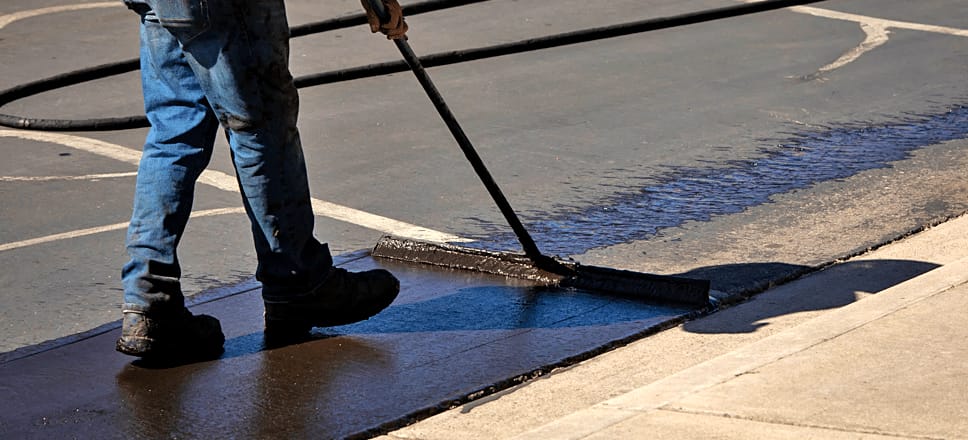
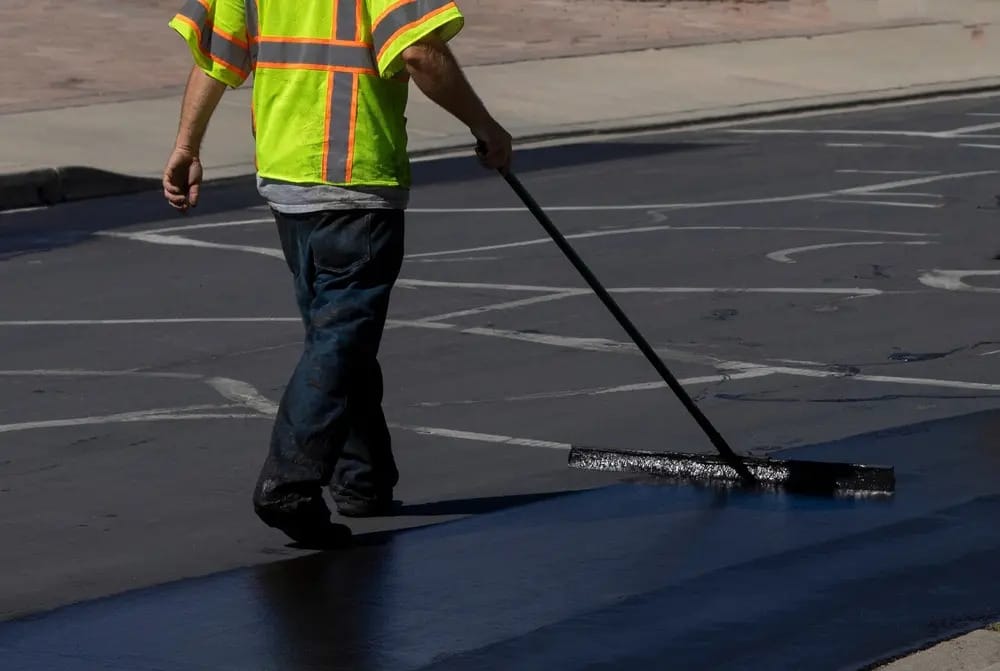
We typically squeegee the first coat into the surface to work sealer into hairline cracks, then spray the second coat for a uniform finish. On steeper grades or high-traffic drive lanes we may rely more on squeegee application so the coating does not run. We finish by barricading the lot, posting reopening times, and returning to re-stripe after the sealer has fully cured.
Materials We Use For Denver’s Climate
Not all sealers handle Colorado’s altitude and UV the same way. At Precision Asphalt Denver we use commercial-grade, coal tar or asphalt emulsion sealers that are specified for high UV exposure and freeze-thaw cycles. Coal tar holds up especially well against petroleum drips in busy retail parking, while asphalt emulsion can be a better fit near sensitive landscaping or certain municipalities. We can discuss the pros and cons of each based on how your property is used.
We blend sand and additives into the sealer to improve traction, reduce scuffing, and build a stronger wear layer. The sand load, typically 2 to 4 pounds per gallon, is adjusted based on whether the area sees mostly car traffic, frequent delivery trucks, or a lot of turning and backing. Additives can speed up drying during cooler shoulder seasons or improve flexibility for lots that see heavy truck traffic.
Because Denver’s weather can change quickly, we track pavement temperature and overnight lows, not just the daytime forecast. We only sealcoat when we can reasonably expect cure times that will allow you to reopen on schedule and avoid tracking or premature wear.
Common Parking Lot Problems We Solve In Denver
Local property managers often call us about the same recurring issues: early surface raveling on newer lots, spider web cracking in older areas, ponding near drains after snowmelt, and deep ruts where trash trucks or delivery vehicles turn. Before recommending sealcoating, we walk the lot with you and point out where sealcoat alone is not enough.
Hairline and small block cracks can generally be sealed after proper crack filling, which slows water infiltration and buys years of extra life. Alligator cracking, where the pavement looks like shattered glass, usually signals base or subgrade issues. In those sections we recommend saw-cut removal and patching prior to sealcoating or, if the area is extensive, we may suggest a phased replacement plan so costs are spread out over multiple years.
We also pay special attention to Denver problem spots: south-facing entrances baked by sun, shaded north edges that hold snow longer, and tight drive-thru lanes that see constant tire scuffing. For these, we might adjust the number of coats, the sand load, or even recommend a different maintenance frequency between full sealcoat cycles.
What Affects the Cost of Parking Lot Sealcoating
Pricing for parking lot sealcoating in Denver is driven by more than square footage. The condition of the asphalt, the amount of crack filling and patching needed, layout complexity, and how we stage the work around your business all make a difference.
An open rectangular lot with light cracking typically costs less per square foot than a chopped-up property with islands, loading docks, and multiple entrances that must stay partially open. Heavy oil staining, severe cracking, numerous trip hazards, or many potholes will require additional prep and repairs. Those items cost more up front but help prevent repeating the same issues year after year.
Access and scheduling also matter. For 24-hour operations or busy medical facilities, we may phase work at night or over multiple weekends to keep you open, and that extra mobilization time slightly increases the investment. When we visit your property, we provide a clear, written breakdown that separates crack filling, patching, sealcoating, and striping so you can see exactly what you are paying for and adjust scope if needed.
How We Plan Work Around Your Tenants, Customers, and Operations
A sealcoating project can run smoothly or be a headache depending on planning. At Precision Asphalt Denver we lay out a traffic control and phasing plan before we start. For retail centers, we often split the lot so one section remains open while the other cures, then reverse. For apartment communities, we coordinate with management to notify residents, identify priority parking for accessibility, and phase work so nobody is boxed in.
We provide property managers with simple resident or tenant notices that list start dates, cure times, towing information if required by the property, and a sketch of which areas are closing when. Our crews set up cones, barricades, and caution tape and place clear “Lot Closed” and “Lot Open” signs so drivers are not guessing. This planning is especially important during Denver’s busy summer season, when warm weather shortens the window between snow events and holiday traffic.
If weather shifts, we call you early to adjust scheduling, not at the last minute. Protecting your business access and resident satisfaction is just as important to us as putting down a good coat of sealer.
When To Sealcoat And How Often In Denver
In the Denver area, the sweet spot for sealcoating is late spring through early fall when overnight lows stay consistently above 50 degrees and the surface can dry before dew or frost. We typically avoid very late-day applications in September and October because cool evenings can slow curing and increase the risk of tracking.
As a rule of thumb, new asphalt should cure for 12 to 18 months before its first sealcoat, depending on mix design and traffic. After that, most commercial lots benefit from sealcoating every 3 to 5 years. High-traffic retail centers or lots with a lot of turning movements near entrances may lean closer to 3 years, while lightly used office or church lots can often push closer to 5.
We often pair sealcoating with restriping to refresh parking stalls, ADA spaces and signage, fire lanes, and pedestrian markings. By tracking your lot on a maintenance schedule, we can group smaller repairs with planned sealcoat cycles, which is usually more cost-effective than reacting to new cracks and potholes each year.