Home › Asphalt Striping and Pavement Markings
Precision Asphalt Denver offers asphalt striping in Denver, CO to clearly mark parking spaces, drive lanes, and safety zones. Our team lays out efficient parking plans, applies bright, long lasting pavement markings, and keeps your property ADA compliant and easy to navigate.
Precision Asphalt Denver provides professional asphalt striping throughout Denver, CO, Colorado and the surrounding area. Our licensed, insured crew delivers safe, clean, on-time work with a free estimate before anything begins. Call (720) 807-8328 or request your free quote.
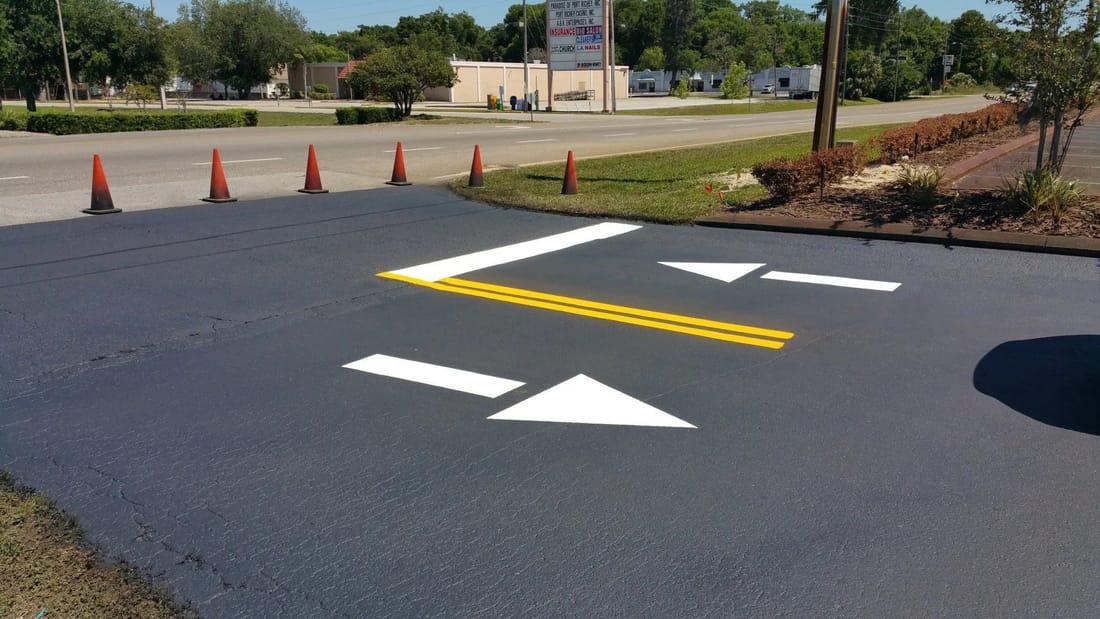
Practical Asphalt Striping Services for Denver Properties
Asphalt striping is not just about making pavement look neat. Correct pavement markings control traffic flow, keep people safe, and help you stay compliant with Denver and Colorado accessibility and fire lane requirements. Precision Asphalt Denver focuses on functional layouts that match how your property is actually used, instead of copying a generic striping template.
We handle new layouts on fresh asphalt, re-striping faded lots, and layout changes when you want to add spaces or improve traffic flow. Before any work begins, we walk the site with you, point out existing problems like confusing arrows, tight turning radiuses, or non-compliant ADA spaces, and talk through options. On busy commercial sites, we often phase work by section so you can keep operating while we stripe.
Our crew works in Denver every week, so we plan striping around local weather patterns. Outdoor striping is usually scheduled from late spring through early fall when daytime temperatures are consistently above about 50°F and surfaces are dry. In cooler months we can still handle interior or covered parking structures, as long as the surface and ambient temperatures are suitable for the striping products we use.
How Our Asphalt Striping Process Works
Precision Asphalt Denver follows a straightforward, consistent process for every asphalt striping job so you know exactly what to expect.
1. Site review and measuring: We verify lot dimensions, existing space sizes, drive lanes, and slopes. This lets us confirm how many standard and accessible stalls will fit and where signage or wheel stops are needed.
2. Layout planning: Using your goals (more parking, better traffic flow, ADA improvements), we sketch a practical layout. For small lots, we can mark it out on site with chalk or crayon. For larger or more complex properties, we provide a scaled layout drawing for approval.
3. Surface preparation: Striping fails early when the pavement is dirty or oily. We blow off loose debris, scrape mud, and treat obvious oil spots with a cleaner or primer so the paint will bond. If old lines are heavily built up or in the wrong locations, we may recommend grinding or blacking them out before re-striping.
4. Layout marking: We snap chalk lines or use string lines and tape to mark centers of parking bays, edge lines, and curb markings. This is where we dial in stall width, angles, and turning space, so the final lines look straight and consistent.
5. Striping application: We use professional airless striping machines set to the correct pressure and tip size for the paint selected. For standard parking lines, our crew follows layout marks carefully to keep line width and coverage consistent. Crosswalks, arrows, ADA symbols, and stencils are applied with reusable or custom-cut templates so they are clear and uniform.
6. Dry time and re-opening: Most standard traffic paints are dry to the touch in 15 to 60 minutes depending on temperature, sun, and humidity. We block off the area during application and only reopen sections once the paint has reached a safe cure for traffic use. On busy sites, we coordinate timing so your peak customer or tenant hours are minimally impacted.
Material Options for Pavement Markings in Denver
Not all pavement marking materials hold up the same in Denver traffic and weather. Precision Asphalt Denver explains your options clearly so you understand the tradeoffs between cost and longevity.
Standard waterborne traffic paint: This is the most common and cost-effective choice for parking lots and light-traffic areas. It applies quickly, has low odor, and dries fast in normal summer conditions. With Denver’s freeze-thaw cycles and UV exposure, you can expect to re-stripe every 1 to 3 years depending on traffic volume and snowplow activity.
High-build or premium paints: Thicker, higher-solids paints create more durable lines with better visibility. These may make sense for busy retail centers, grocery stores, and medical facilities where you want markings to stay readable longer between maintenance cycles.
Reflective glass beads: For lots used heavily at night or during winter, we can broadcast glass beads into the wet paint. These beads catch headlights and make lines and symbols pop in low-light conditions, which can be useful near warehouses, distribution centers, hotels, and hospitals.
Thermoplastic and specialty markings: For select applications like high-priority crosswalks or stop bars at busy entrances, we can discuss thermoplastic or other specialty striping systems. These require higher material and labor costs but offer longer life in specific locations that see constant turning and braking.
We match the material to real-world use. For example, a small apartment lot may not need reflective beads, while a truck-heavy industrial property off I-25 might justify more durable and reflective products in key travel lanes and dock areas.
Layout Design, ADA Compliance, and Safety Markings
Good asphalt striping is as much about design and compliance as it is about straight lines. Precision Asphalt Denver looks at how people actually drive and walk on your property and builds the layout around that.
Parking layout: We help you choose between 90-degree, 60-degree, or 45-degree parking based on lot size, traffic patterns, and how easy you want it to be for drivers to pull in and out. In tight urban Denver lots, angled parking can sometimes increase usable spaces and reduce fender benders.
ADA accessible spaces: Colorado and federal ADA rules require specific numbers of accessible spaces, minimum widths, van-accessible spots with access aisles, and clear striping and symbols. We measure and mark these correctly, place access aisles on the right side where possible for van loading, and include cross-hatching and wheelchair symbols as required. We also coordinate pavement markings with your ramp and sign locations so everything functions together.
Safety and directional markings: We stripe stop bars at key intersections, paint traffic arrows to clarify one-way lanes, and mark fire lanes, loading zones, and no-parking areas with clear text and color coding. In mixed-use sites like small retail plazas or churches, clear markings reduce confusion when traffic is heavy.
Pedestrian visibility: Crosswalks, walkways to building entrances, and pick-up/drop-off zones are laid out so pedestrians have predictable, marked paths. For schools, daycares, and medical offices, we often recommend wider crosswalks and additional markings leading directly to the main doors.
Cost Factors and Common Striping Problems in Denver
The cost of asphalt striping in Denver depends on a few practical factors that we explain upfront so there are no surprises.
Key cost drivers:
- Size of the project: Total number of stalls, symbols, and linear feet of lines.
- Material choice: Standard paint versus premium or bead-enhanced options.
- Layout complexity: Simple re-stripes over existing lines cost less than fully new layouts with numerous stencils, crosswalks, and specialty markings.
- Surface condition: Heavily cracked, oily, or damaged surfaces may need repair, cleaning, or primer before striping.
- Phasing and access: Properties that require night work, multiple phases, or tight window scheduling can affect labor costs.
Common local striping issues and how we address them:
Fading from sun and snow: Denver’s high elevation means strong UV exposure and frequent snow removal. We use quality traffic paints, apply them at the correct thickness, and recommend practical maintenance intervals rather than unrealistic “lifetime” claims.
Plow and tire damage: Snowplows and studded tires can chew up lines near entrances and tight turns. Where we see repeated wear patterns, we may suggest a slightly different layout, more durable products in those zones, or minor asphalt repair to remove ruts that collect water and ice.
Poor adhesion on oily or sealed surfaces: Fresh sealcoat or oil spots can cause peeling. We check for this in advance, schedule striping after proper cure times for new sealcoat, and spot-prime problem areas so the markings last longer.
Confusing or overlapping old lines: When a lot has been re-striped multiple times without removing obsolete markings, drivers ignore the lines. We can black out or grind incorrect markings, then install a clean, clear layout so traffic flows as intended.
Scheduling, Seasonality, and Working With Precision Asphalt Denver
Because asphalt striping depends heavily on weather, scheduling matters in Denver. Precision Asphalt Denver typically books most outdoor striping between late April and October, when daytime temperatures and overnight lows support proper curing. If you are planning a larger lot restripe before winter, it pays to contact us well ahead of the first cold snaps and snow events.
On active sites like retail centers, restaurants, multifamily properties, and office parks, we often stripe during off-hours, evenings, or weekends. We can break the project into segments, clearly block off sections, and coordinate with your management or security so tenants and customers know where to park while work is underway.
For property managers, we can bundle striping with sealcoating or minor asphalt repairs so your lot looks fresh in a single coordinated project. However, we always stripe last, after repairs and sealcoat have cured properly, to avoid tracking and premature paint failure.
When you contact Precision Asphalt Denver, be ready to share a site address, any existing site plans or parking counts, your preferred timing, and any specific concerns like ADA citations or traffic complaints. We can usually provide a straightforward estimate after a short site visit and layout review, and we will tell you clearly what is included in the price, what materials we recommend for your specific use, and how often you should expect to re-stripe in Denver’s climate.