Home › Parking Lot Repair & Replacement
Precision Asphalt Denver offers complete parking lot repair in Denver, CO, including pothole patching, crack sealing, and full depth replacement where needed. We restore smooth, safe surfaces that reduce liability, improve first impressions, and extend the life of your asphalt investment.
Precision Asphalt Denver provides professional parking lot repair throughout Denver, CO, Colorado and the surrounding area. Our licensed, insured crew delivers safe, clean, on-time work with a free estimate before anything begins. Call (720) 807-8328 or request your free quote.
Parking lot repair for Denver businesses that cannot afford downtime
A worn or cracked parking lot is more than an eyesore. In Denver, freeze-thaw cycles, snow plows, and heavy delivery trucks can quickly turn small defects into safety hazards and liability issues. Precision Asphalt Denver focuses on practical, long-lasting parking lot repair so your customers and tenants can keep using the property with minimal disruption.
We start with a quick site evaluation. We walk the lot, mark out trip hazards, potholes, low spots where water sits, and areas where the base may be failing. You will know exactly which sections can be repaired and which are costing you more in constant patching than they are worth. From there, we give you clear options, from targeted patching and crack sealing to full-depth replacement of failing sections.
Most of our Denver clients are small to mid-size properties: medical offices near Colorado Boulevard, apartment communities in Aurora, churches and schools in Lakewood, and retail centers around I-25. We understand that completely closing a lot is rarely an option, so our plans usually phase the work. We keep clearly marked open routes for visitors and schedule the heaviest work at off-peak times or weekends whenever possible.
How we evaluate if you need repair, overlay, or full replacement
The most important decision is whether your lot can be saved with repair and resurfacing or if it needs full-depth replacement. Precision Asphalt Denver uses a straightforward process so you do not overspend or under-fix the problem.
First, we test the surface and the base. Alligator cracking, where the surface looks like reptile skin, usually means the asphalt or base is fatigued. We core or dig small test sections to see if the base rock is still firm and dry. If the base is solid, we can often mill off the top layer and install a new asphalt overlay. If the base is pumping water or is soft under truck traffic, we recommend full-depth replacement in that area.
Second, we check drainage. In Denver, snow melt refreezes overnight. If your lot has low areas that collect water, you will see accelerated cracking and potholes in those spots. We use lasers and levels to see how the lot slopes, then design repairs that restore proper pitch to drains or out to the street. Sometimes this means milling extra in key areas, adding base, and adjusting curb or gutter edges.
Finally, we match your lot to your use. A small office with light passenger cars may only need a thin overlay and spot base repairs. Grocery stores, warehouses, or properties along truck routes often need thicker asphalt or a different mix to handle repeated loading. We explain the trade-offs in cost and longevity so you can pick the level of repair that fits your budget and traffic.
Common Denver parking lot problems and how we fix them
Denver’s climate is hard on asphalt. Rapid temperature swings, snow removal equipment, and de-icing products all contribute to a specific pattern of damage that we see over and over again.
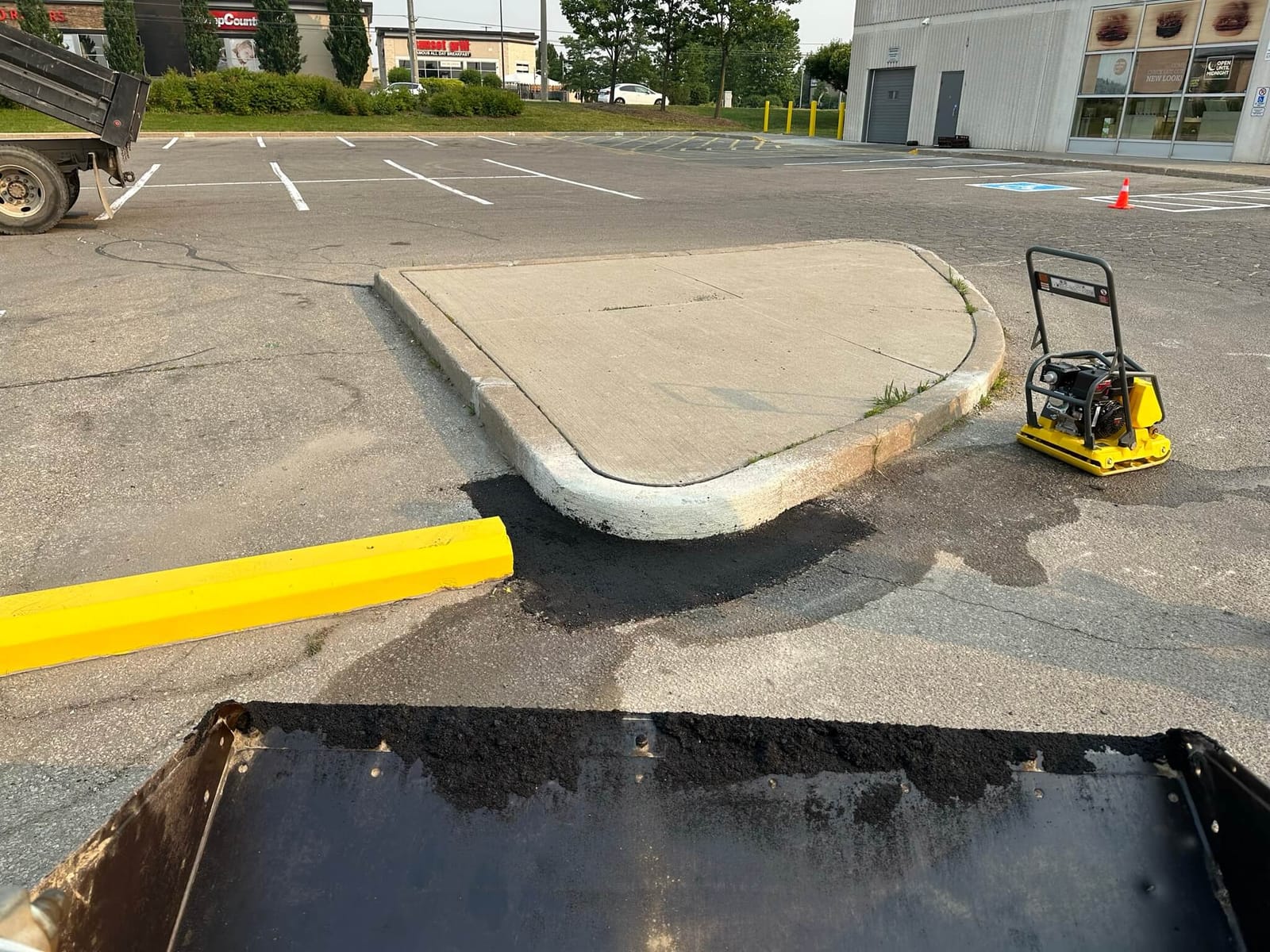
Potholes usually start where water has entered through a crack and weakened the base. Our crews saw cut around each pothole to create a clean rectangle, remove loose material, compact fresh base rock if needed, then install new hot mix asphalt and compact it flush with the surrounding pavement. A quick cold patch from a hardware store might last a storm or two, but it will not bond or compact correctly under Colorado traffic and weather.
Alligator cracking and rutting in drive lanes are common near dumpsters, loading docks, and busy entry points. Here, we typically recommend full-depth patching. We remove the failed asphalt, repair or replace the base, then pave with new asphalt designed for heavier traffic. This prevents you from repeatedly patching the same sections every spring.
Heaving and raised areas show up where tree roots or frost have pushed the pavement. In these cases we remove the affected section, cut roots where allowed, re-compact the subgrade, then rebuild. When trees are a major factor, we coordinate with you and often your arborist or landscaper so both the pavement and the trees can coexist.
We also address surface raveling and oxidation. High-altitude UV exposure in Denver dries out asphalt more quickly than in many cities. If your lot is losing fine aggregate and turning gray but the structure is sound, targeted patching plus a follow-up sealcoat is usually more cost-effective than letting it break down to the point of structural failure.
Our step-by-step process for parking lot repair and replacement
Precision Asphalt Denver follows a clear, repeatable process so you know what will happen each day of your project.
1. Site walk and consultation: We listen to how your lot is used, when it is busiest, where you see puddles or recurring potholes, and any ADA or tenant concerns. We then walk the lot and note problem areas.
2. Written proposal with diagram: You receive a diagram that labels each repair type, quantities, and a sequence of work. This might include crack sealing, patching, partial depth milling, and full-depth reconstruction of specific panels or drive lanes.
3. Scheduling and phasing: For active properties in Denver, we often divide the lot into 2 to 4 phases. We map out access routes, temporary parking, and signage to keep visitors safe and informed. We coordinate with your property manager or store managers to choose dates that interfere the least with operations.
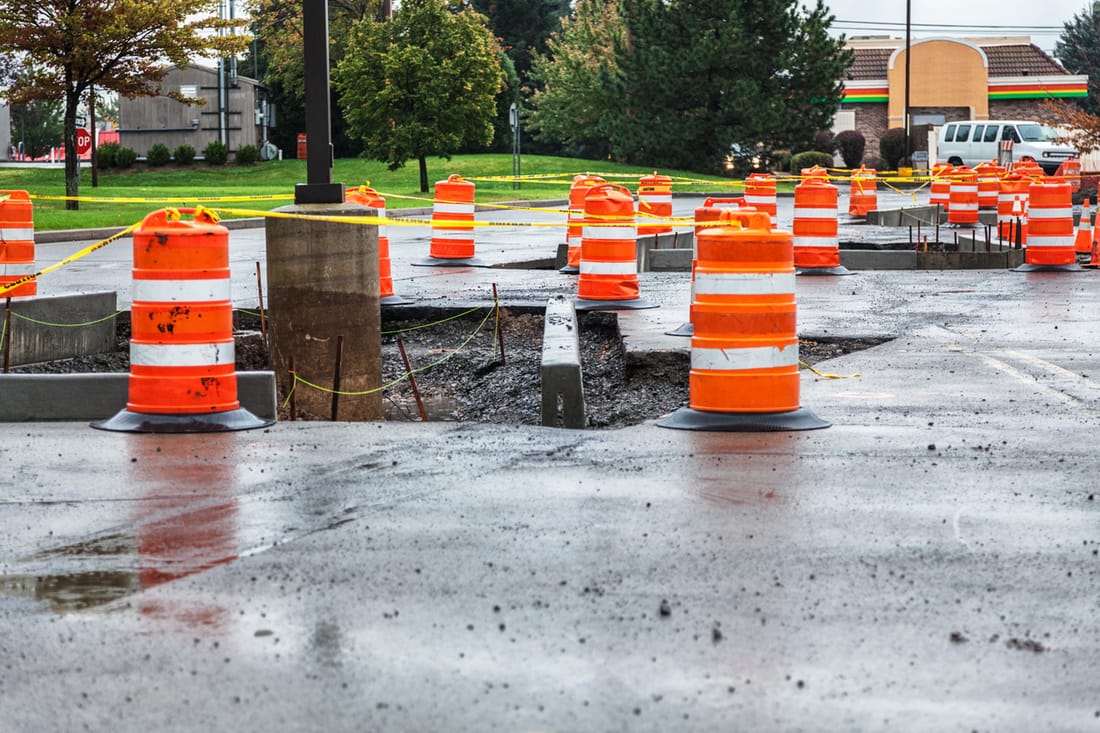
4. Preparation and traffic control: On work day, we set cones, barricades, and signs, then clean the work areas with mechanical sweepers and blowers. Good adhesion depends on a clean, dry surface, especially after spring storms or leaf fall.
5. Removal and base work: We mill or saw cut and remove failing areas. Our crews re-compact the existing base or import and compact new road base where needed. In poor soil pockets along the Front Range, we sometimes install geotextile fabric to stabilize the base and extend the life of the repair.
6. Paving and compaction: We place hot mix asphalt from local plants, match the appropriate thickness and mix design to your use, then compact in multiple passes with steel drum and rubber-tire rollers. Proper compaction is what keeps your new surface from settling and holding water.
7. Striping and reopening: After the new asphalt has cooled, we re-stripe stalls, ADA spaces, fire lanes, and directional arrows according to Denver and ADA standards. We typically reopen the area to traffic the same day or next morning depending on weather and the scope of work.
What affects the cost of parking lot repair in Denver
We are transparent about pricing so you can plan realistically and prioritize what matters most. Several specific factors influence what your parking lot repair or replacement will cost in the Denver area.
Lot size and layout are obvious drivers. A simple rectangle with straight drive lanes costs less per square foot than a tight, irregular lot with islands, planters, and many edges that require handwork. We measure precisely so you are not paying for guesswork.
Base condition has one of the biggest impacts. If your base rock is firm and well drained, an asphalt overlay or partial-depth milling can be very cost-effective. If the base is saturated, contaminated with clay, or was never properly installed, we must correct those issues or you will be buying the same repair again within a few winters. We explain the findings of any test pits or cores so you can see why deeper work may be needed.
Access and phasing can raise or reduce cost. Lots that allow us to work in larger sections are more efficient. Tight inner-city sites or multi-building complexes often require small phases, night work, or weekend work, which adds labor and traffic control costs. We also account for local Denver permitting when full-depth reconstruction or drainage changes are involved.
Material choices affect cost and lifecycle. Thicker asphalt, stronger mixes, upgraded striping paint, and added underdrains cost more upfront but may be the right decision where truck traffic or chronic drainage problems exist. We typically provide at least two options, a base repair plan and a longer-life plan, so you can decide how heavily to invest now versus later.
Material and design options for longer-lasting parking lots
Not every parking lot needs the same thickness or mix. Precision Asphalt Denver uses a range of material and layout options so your repair or replacement matches how your property is actually used.
Mix design is tailored to expected loads. For most passenger car parking in Denver, a standard hot mix asphalt with a moderate asphalt binder content performs very well. In drive lanes, fire lanes, and trash truck paths, we often specify a denser, higher strength mix that resists rutting under repeated heavy loads.
Thickness is another key variable. Light-use lots, like small offices or churches, may only need 2 to 3 inches of asphalt over a good base. Grocery stores and industrial properties may require 4 to 6 inches or more in high-load lanes. We reference local soil conditions and your traffic patterns when recommending thickness so you are not overbuilt or underbuilt.
Drainage and grading adjustments are especially important along the Front Range where sudden storms can drop heavy rainfall. When we repair or replace sections, we look for opportunities to reshape the surface so water flows to inlets instead of sitting in front of entries or in the middle of the lot. This includes minor curb adjustments and, when appropriate, adding new or improved drains.
Layout updates can also be part of a replacement project. If you are already investing in a new surface, it is a good time to adjust stall widths, improve fire lane markings, or add crosswalks. We can revise striping plans to meet current ADA requirements and Denver codes while improving traffic flow.
Planning your parking lot project with Precision Asphalt Denver
A successful parking lot repair or replacement project depends on planning, communication, and realistic timelines. When you contact Precision Asphalt Denver, we start by discussing your calendar, seasonal needs, and any upcoming tenant changes.
For many Denver properties, spring and fall are ideal for asphalt work because temperatures are favorable and there is less risk of extreme heat or snow. Retail centers often prefer early spring work before peak summer traffic, while schools usually schedule projects in summer breaks. We help you pick a window that works with your operations and typical Colorado weather patterns.
During the project, you will have a single point of contact who updates you on daily progress, any discoveries in the base, and weather-related schedule shifts. We coordinate with snow removal contractors and landscapers so that edges, sprinkler heads, and signage are protected and reset properly.
Once the work is complete, we explain basic care: when to allow heavy trucks, how to manage snow plow blades on new asphalt, and whether sealcoating will be beneficial in your situation. Our goal is not just to fix your lot today but to help you get the maximum service life from your investment.
If you are seeing potholes, standing water, or spreading cracks in your lot, a short site visit can clarify your options. Precision Asphalt Denver is locally based, familiar with Denver soils and weather, and focused on giving you straightforward recommendations that match your property and budget.