Home › Asphalt Sealcoating & Crack Filling
Precision Asphalt Denver provides professional asphalt sealcoating in Denver, CO to protect residential driveways from sun, moisture, and chemicals. Our crack filling and premium sealer create a dark, even finish that slows deterioration, improves appearance, and extends the life of your pavement.
Precision Asphalt Denver provides professional asphalt sealcoating throughout Denver, CO, Colorado and the surrounding area. Our licensed, insured crew delivers safe, clean, on-time work with a free estimate before anything begins. Call (720) 807-8328 or request your free quote.
Protecting Your Asphalt in Denver’s Tough Climate
In Denver, your driveway or parking lot lives through intense sun, rapid freeze-thaw cycles, and snowmelt that can seep into the smallest cracks. Without protection, that combination breaks down asphalt quickly. Precision Asphalt Denver focuses on asphalt sealcoating and crack filling designed specifically for Colorado’s high-altitude conditions so your pavement lasts longer and looks better.
Sealcoating is a protective layer applied to the surface of your asphalt. It shields against UV rays, moisture, road salt, and oil drips from vehicles. Crack filling addresses the openings that appear as asphalt expands and contracts with temperature swings. Together, these services slow aging, stop small problems from turning into potholes, and can often delay the expense of full resurfacing.
Local property owners in Denver often call us after a harsh winter when they notice new cracks, raveling at the edges, or a faded, chalky look. If you are not sure whether you need sealcoating, we look at your pavement color, how much aggregate (the small stones) is exposed, and whether cracks are tight hairlines or wide gaps. We then recommend a schedule that fits real usage, not a one-size-fits-all rule. For many Denver homes and light-use lots, sealcoating every 3 to 4 years is appropriate, while high-traffic commercial lots may need it closer to every 2 years.
Our Asphalt Sealcoating Process Step by Step
Effective sealcoating is about careful preparation and using the right materials for our local climate. When Precision Asphalt Denver sealcoats your asphalt, we follow a consistent, detailed process so the coating bonds well and cures correctly.
First, we perform a site assessment. We walk the entire area, mark oil spots, identify cracks that need different treatments, and note any drainage or slope issues. We also check for structural failures, such as alligator cracking, that sealcoating alone will not fix. If a section is too far gone, we will tell you honestly that it needs patching instead of just sealing over it.
Next, we clean the surface thoroughly. We power blow debris, sweep loose gravel, and use wire brooms on stubborn dirt at the pavement edges. In commercial lots with heavy traffic, we may use pressure washing in targeted areas. Sealcoat will not bond to dust, leaves, or sand, especially in Denver’s breezy conditions, so this step is critical.
Oil and gas spots are treated with an oil primer so the sealcoat does not peel away later. We then complete crack filling and any minor leveling repairs before we apply the coating itself. For residential driveways and lighter-use commercial lots, we typically use a refined coal tar or asphalt emulsion sealer that is designed to flex with temperature changes and stand up to strong UV exposure.
We apply the sealer in thin, even coats by spray, squeegee, or a combination of both. Corners, edges near concrete, and around structures are usually cut-in by hand so we keep a clean line and avoid splatter. Depending on your pavement condition and usage, we may recommend two coats, which is common for busy parking lots or areas where snowplows operate frequently.
Curing is the final step and we take it seriously. In Denver’s dry air, sealcoat can look dry on top in a few hours, but it still needs at least 24 hours (sometimes longer for shaded or cool areas) before opening to traffic. We set clear barricades, tape, and signage, and we give you specific reopen times for foot and vehicle traffic so the surface is not damaged during the critical curing period.
Crack Filling Techniques That Survive Colorado Winters
Crack filling is where we stop water from getting under your asphalt and causing bigger failures. In Denver, where temperatures can swing 30 degrees in a single day and winter nights drop well below freezing, this step may be even more important than the sealcoat itself.
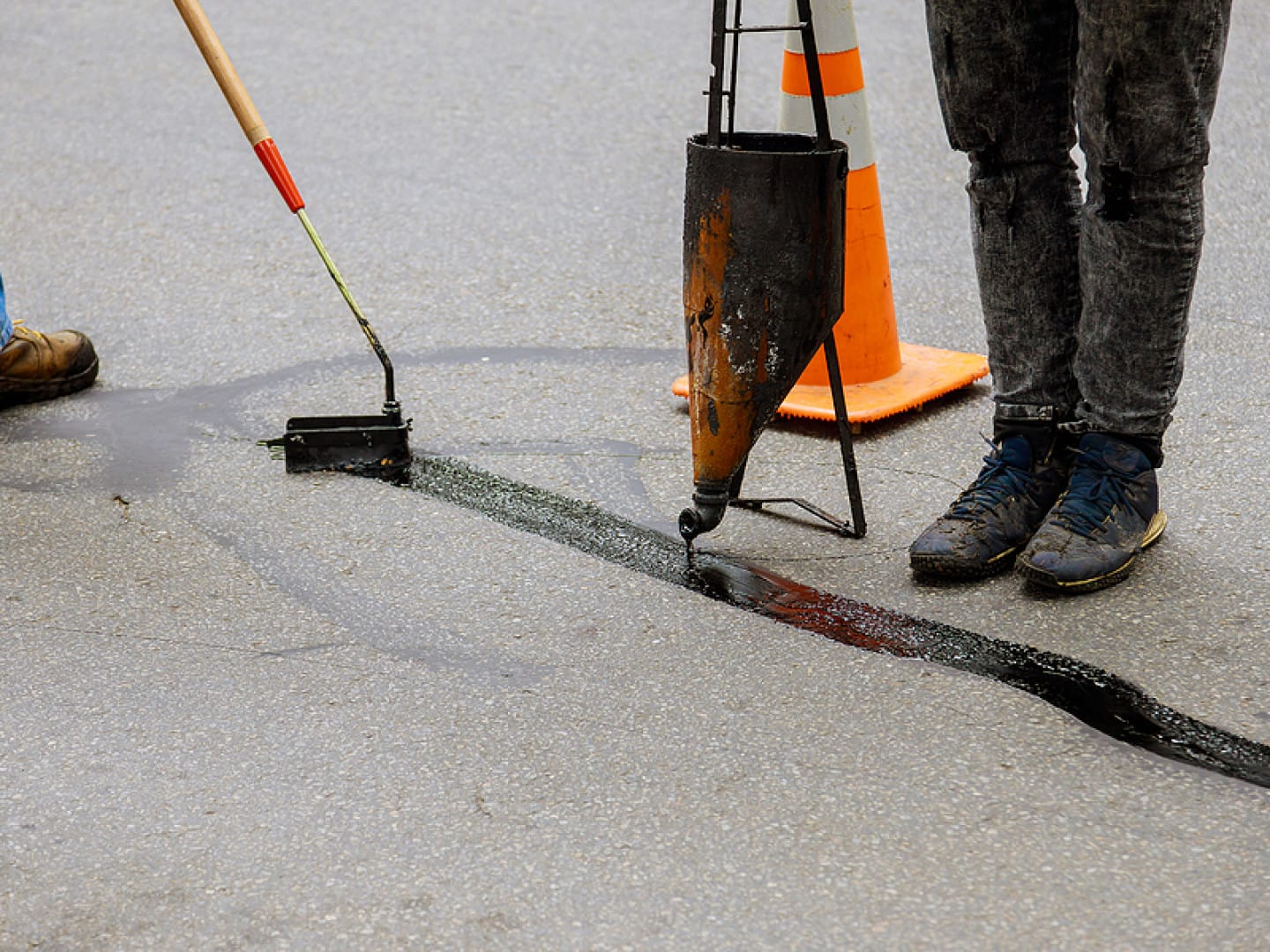
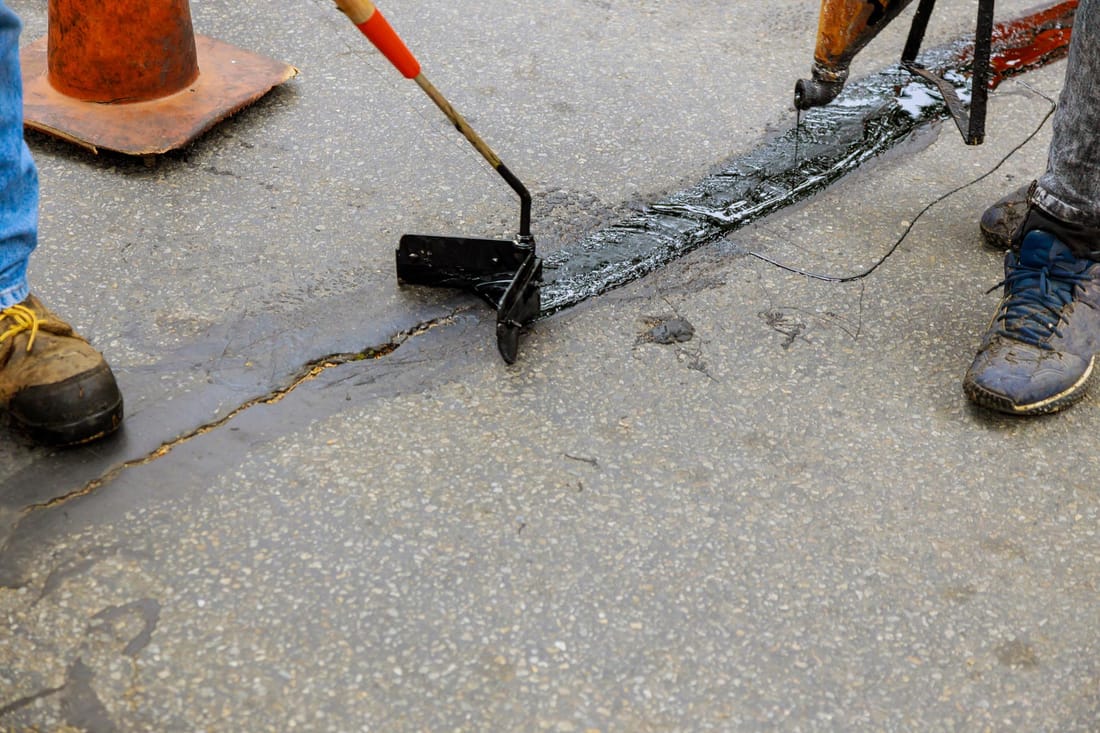
Precision Asphalt Denver matches the crack repair method to the type of crack. For narrow, working cracks that open and close with seasons, we typically use a hot rubberized crack sealant. We clean the cracks with steel brushes and high-pressure air, then heat the sealant and apply it so it fills from the bottom up. While it is still warm, we smooth or band the material slightly wider than the crack. This creates a flexible, watertight joint that can flex with expansion and contraction.
For larger non-working cracks or small pothole beginnings, we may use a hot pour material combined with a fine aggregate or a cold patch asphalt, depending on temperature and access. In some cases, such as extensive alligator cracking, simple crack filling is not recommended because the base layer is compromised. We explain when a larger patch or milling is required, so you are not paying for a quick fix that will fail after one winter.
Timing matters for crack work in Colorado. We prefer to perform crack filling when the pavement is dry and the temperature is stable, usually spring through early fall. This allows the material to bond and cure correctly before winter moisture arrives. If you call us in late fall with open cracks, we still do what we can to stabilize them before freeze-thaw cycles worsen the damage.
When we combine professional crack filling with sealcoating, the sealcoat helps protect the repaired joints and create a more uniform surface. This paired approach is why many Denver property managers schedule both services together as part of their pavement maintenance plan.
What Affects Cost for Asphalt Sealcoating & Crack Filling in Denver
Pricing for asphalt sealcoating and crack filling can vary, and we want you to understand what is driving the numbers before you decide. Precision Asphalt Denver focuses on giving you clear, line-item estimates so you know exactly what you are paying for.
The total square footage of your pavement is the starting point. Larger areas require more sealer and more labor. However, bigger lots can also benefit from volume efficiencies, which we pass along in our pricing. The condition of the surface comes next. A relatively smooth, dark asphalt surface with minimal cracking will cost less to treat per square foot than an older grey surface with widespread cracks and raveling.
Crack density is a major factor. Light cracking that requires basic routing and hot rubber filling adds less to the cost than heavily cracked surfaces where we have to spend significant time cleaning, widening, and filling each joint. The type of crack sealant and whether we use standard hot rubber, a higher-performance polymer-modified material, or additional reinforcement also influences the price.
Number of coats matters as well. Many residential driveways in Denver do well with one robust coat of sealer after cracks are treated, while busy commercial lots, HOA private roads, and properties that see snowplows or delivery trucks may need two coats for durability. On commercial projects, traffic control needs can add cost. If we must phase work to keep parts of the lot open, work at off-peak hours, or coordinate around tenants, that planning is built into the estimate.
Finally, access and layout influence the labor required. Simple, rectangular lots are faster and more efficient to sealcoat than tight, cut-up areas with islands, loading docks, or heavy landscaping. During your estimate, we walk the site, point out these factors, and explain how they affect pricing so there are no surprises when the job is complete.
How We Work With Denver Homeowners & Property Managers
Every property is different, and so is every client. Precision Asphalt Denver adapts our approach so homeowners, property managers, and business owners all get the information and scheduling support they actually need.
For homeowners, we keep it straightforward and low-stress. We evaluate your driveway, explain whether it truly needs sealcoating or if simple crack filling is enough for now, and give you an honest schedule. We talk about things like where you can park while the driveway cures, how sealcoat may track onto light-colored concrete if you drive on it too early, and when you can safely use snow shovels or snow blowers on the new surface.
For property managers and commercial owners, our focus is planning and communication. We map out phases for larger parking lots, coordinate with your tenants or store managers, and help you choose the right time of year for work. In Denver, many commercial clients prefer late spring or early fall so we avoid peak summer heat and reduce disruption to customers.
We also help you create a simple, realistic maintenance plan. Instead of waiting for major failures, we recommend a cycle that might include annual crack inspections, spot crack filling after severe winters, and sealcoating every few years based on traffic and exposure. This approach tends to lower long-term costs and helps keep your property looking maintained and safe.
Throughout the process, we are transparent about what sealcoating and crack filling can and cannot do. Sealcoating will not fix significant dips, standing water issues, or deep structural failures, but it does significantly slow down wear and improves appearance when the base pavement is still solid. You will always get a clear explanation of options so you can prioritize repairs within your budget.
When to Schedule Service and What to Expect on Job Day
In the Denver area, weather planning is part of any good sealcoating and crack filling job. Precision Asphalt Denver monitors the forecast closely because temperature and moisture directly affect how the materials cure.
Ideal conditions are dry weather, pavement temperatures above 50 degrees, and no rain in the forecast for at least 24 hours. That usually means we schedule most asphalt sealcoating projects from late April through October. We can still perform some crack filling outside that window, as long as the pavement is dry and not frozen. If a sudden storm pops up in the forecast, we will reschedule instead of risking a poor result.
Before job day, we ask you to remove vehicles, trailers, and portable items from the work area, and to turn off sprinklers. For commercial lots, we help you plan signage and notices for tenants or customers. On the day of work, our crew arrives with clear instructions, sets up cones or tape for traffic control, and walks the site one more time to confirm the plan.
Work typically follows this pattern: detailed cleaning, crack preparation and filling, edge cutting, first coat application, and if needed, a second coat after the first has set. For larger parking lots, we may return the next day to finish line striping, which requires the sealcoat to be fully dry to ensure straight, sharp markings.
After we finish, we leave you with specific care instructions. These include when to walk and drive on the surface, how to handle snow removal (using plastic shovels or properly adjusted plow blades to avoid gouging), and what to watch for in the first few days as the material fully cures. Our goal is that you feel confident about how to protect your investment long after our trucks leave the site.