Home › Asphalt Driveway Repair & Replacement
Precision Asphalt Denver provides thorough asphalt driveway repair in Denver, CO, from crack filling and patching to full driveway replacement. We diagnose the cause of damage, recommend the most cost effective solution, and restore a smooth, safe surface that stands up to daily use and changing weather.
Precision Asphalt Denver provides professional asphalt driveway repair throughout Denver, CO, Colorado and the surrounding area. Our licensed, insured crew delivers safe, clean, on-time work with a free estimate before anything begins. Call (720) 807-8328 or request your free quote.
Asphalt Driveway Repair & Replacement in Denver, CO
Precision Asphalt Denver focuses on one thing for homeowners in the metro area: asphalt driveways that hold up to Colorado weather and daily use. Our crews work in Denver neighborhoods every day, so we know how freeze-thaw cycles, altitude, and local soils affect residential driveways long term.
Asphalt driveway repair is often the smartest way to extend the life of your existing pavement without jumping to a full replacement. When damage is localized, we can target those areas, preserve the good base underneath, and save you money while still improving appearance and performance.
When repairs are no longer enough, we handle full asphalt driveway replacement, from demolition and haul-off of the old surface to new base prep and a properly compacted asphalt mat. Our goal is to give you a surface that drains correctly, resists heaving and cracking, and looks clean in front of your home.
Every project starts with an on-site evaluation. We walk the driveway with you, identify causes of the damage (drainage, tree roots, base failure, snowmelt chemicals, or simply age), then lay out specific repair or replacement options with pricing and realistic expectations for lifespan.
How We Diagnose Your Driveway Problems
Before talking about cost or scheduling, Precision Asphalt Denver starts with diagnosing what is actually going wrong with your asphalt driveway. A quick visual look from the curb is not enough. We check thickness, base condition, edges, and drainage patterns.
Cracks tell us a lot. A network of fine, interconnected lines (alligator cracking) usually means the base or subgrade is failing, often from years of water getting under the surface or from repeated freeze-thaw cycles. In that case, simple crack filling will not last, and we will recommend cutting out and rebuilding those sections or planning for replacement.
Isolated straight cracks, especially along joints or at the base of the driveway near the street, are more likely related to movement or minor settling. These can often be cleaned, routed, and filled with hot rubberized crack sealant to keep water out. We look for any vertical movement across the crack, which would suggest a deeper problem.
We also look at depressions and birdbaths where water sits after storms or snowmelt. In Denver, standing water that refreezes will quickly break a driveway apart. If depressions are shallow and the base is stable, we can sometimes mill or level those areas with asphalt leveling course rather than replacing the entire driveway.
Lastly, we check the edges. Driveway edges that are crumbling or breaking off often mean the original drive was installed without proper shoulder support or base width. In those cases, we may recommend widening the base and rebuilding the edge to prevent further unraveling.
Targeted Asphalt Driveway Repairs (When Full Replacement Is Not Needed)
Many Denver homeowners assume that visible damage automatically means a new driveway. In many cases, Precision Asphalt Denver can perform targeted asphalt repairs that significantly extend the life of your existing pavement.
Crack sealing is usually the first line of defense. We use hot-applied rubberized crack sealant, not cold pour products from a home center. Cracks are cleaned with wire wheels and compressed air. Wider cracks may be routed to create a consistent profile, which allows the sealant to bond properly. This keeps water out of your base, which is critical in Colorado's freeze-thaw climate.
For potholes or localized base failures, we cut out the damaged area in a clean, rectangular shape, typically 2 to 4 inches beyond visible damage. The failed asphalt is removed, the base is inspected and either recompacted or replaced, then new hot mix asphalt is placed, leveled, and compacted so it ties into the surrounding surface. Done correctly, you should not feel a bump when you drive over a patched area.
Depressions can be corrected with infrared repair or with a leveling course of hot mix asphalt. With infrared, we heat the existing asphalt to blend new mix into the old, which can be effective for certain types of settling. For more severe depressions, we may mill or grind down high spots, add leveling course, and recompact.
After repair work, we often recommend a sealcoat if the rest of the driveway is structurally sound. Sealcoating is not a structural fix, but it protects the repaired surface from oxidation, UV damage, and winter deicing chemicals used on Denver streets.
Full Asphalt Driveway Replacement: Our Step-by-Step Process
When a driveway has extensive alligator cracking, repeated patchwork, or significant heaving and settling, Precision Asphalt Denver recommends full replacement. A proper replacement follows a clear sequence of steps so you do not end up paying for cosmetic work on a weak foundation.
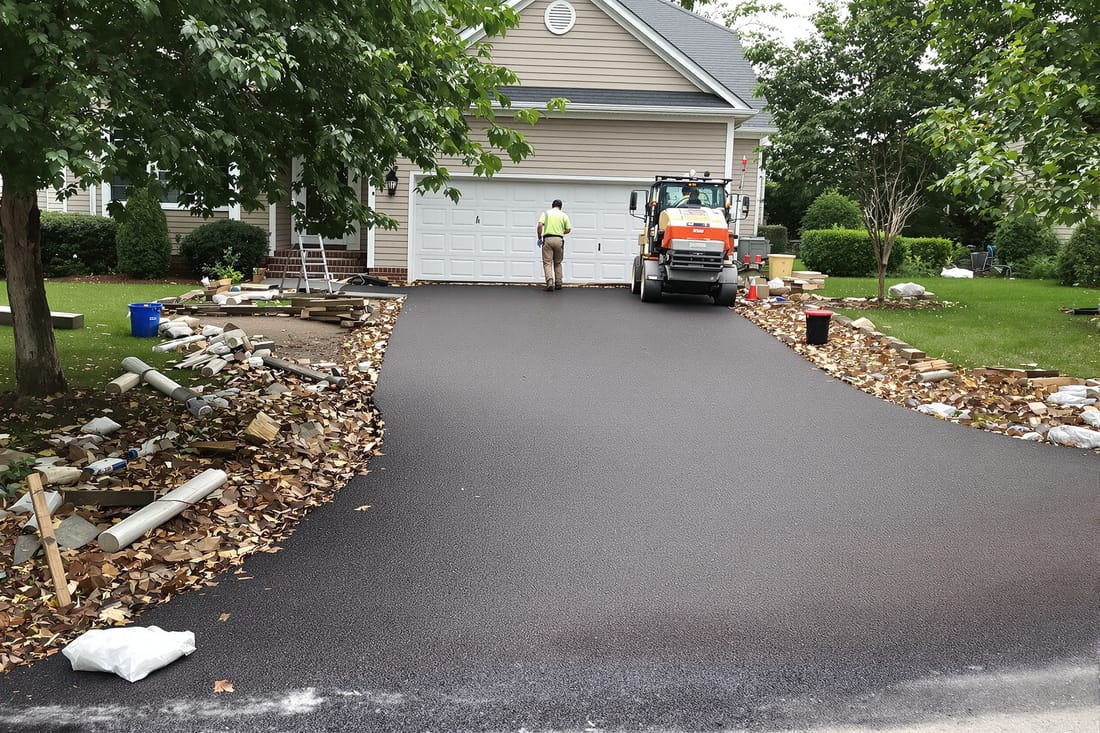
1. Removal and haul-off: We use skid steers and saws where needed to remove the existing asphalt and any obviously failed base material. All debris is hauled off to an approved recycling or disposal facility. If the driveway ties into city sidewalks or curb cuts, we protect those areas and make clean transitions.
2. Base inspection and rebuilding: After removal, we evaluate the existing base and native soil. Many older Denver homes have thin or inconsistent base layers. Where needed, we add and compact new road base (typically a Class 6 or similar aggregate) to bring the base to the correct thickness, often 4 to 6 inches for residential drives, depending on soil and expected vehicle loads.
3. Grading and drainage: Proper slope is essential. We set grades so water moves away from the house, garage, and entry walks, and toward appropriate drainage points. In areas with clay or expansive soils, we pay extra attention to getting surface water off the pavement quickly to reduce subgrade movement.
4. Asphalt placement: For most residential drives, we install 2.5 to 3 inches of hot mix asphalt in one or two lifts, depending on design. For heavier use (work trucks, RVs, trailers), we may recommend thicker sections. The mix design is chosen for Denver's climate and elevation, using a binder that resists cracking in cold and softening in summer heat.
5. Compaction and finish: Steel drum and pneumatic rollers compact the asphalt to the specified density. Edges are compacted and shaped so they are not brittle or prone to breaking off. Joints at sidewalks, alleyways, or the street are sealed so water cannot easily penetrate.
6. Curing and use: Typically, you can walk on a new asphalt driveway within a few hours, but we advise keeping vehicles off for 48 to 72 hours, depending on temperature. We also provide guidance on when to schedule the first sealcoat, usually within the first 12 to 18 months.
What Drives the Cost of Asphalt Driveway Repair & Replacement in Denver
Homeowners often ask why quotes for asphalt driveway repair or replacement can vary so much. Precision Asphalt Denver breaks down pricing based on actual site conditions and work scope so you understand what you are paying for.
Key cost factors include driveway size and shape, thickness of new asphalt, and how much of the existing base needs to be rebuilt. A straight, rectangular driveway with an adequate base will always cost less per square foot than a long, winding drive with curves and tight access.
Access is important. Urban Denver lots with limited equipment access or steep approaches may require smaller machinery and extra labor, which affects cost. Similarly, if trucks cannot back close to the project area, we may need additional time for moving material.
Subsurface conditions can be a major driver. If we find soft spots, organics, or old construction debris under your existing driveway, we have to remove and replace that material so your new pavement does not fail prematurely. That additional excavation and base work increases cost but saves you from paying twice.
For repair projects, costs are driven by the number and size of cracks or potholes, the need for routing or saw cutting, and whether sealcoating or restriping (for shared or multifamily drives) is included. We always present line-item pricing so you can see the value of each repair option rather than a single unexplained number.
Finally, timing can influence price. Denver's paving season is limited by temperature. Scheduling during moderate weather allows better compaction and curing, which improves quality. Trying to rush work late in the season can require additives or additional handling to keep asphalt workable, which can increase cost.
Local Considerations: Denver Weather, HOAs, and City Interfaces
Working in and around Denver means paying attention to climate and local rules. Precision Asphalt Denver builds these realities into every asphalt driveway repair and replacement plan.
Freeze-thaw cycles are the number one enemy of asphalt in our area. We design slopes and recommend crack maintenance schedules so water does not sit in small depressions and then freeze overnight. For north-facing driveways that hold snow longer, we may suggest slightly different surface textures and more frequent crack inspections.
Many Denver neighborhoods have active homeowners associations. We can provide written scopes of work, color samples for sealcoating (usually standard black, but some HOAs limit appearance changes), and site plans if your HOA review committee requires them. We are also familiar with common rules regarding work hours, noise, and equipment staging and can schedule accordingly.
If your driveway ties directly into a city sidewalk, alley, or street, we pay attention to those interfaces. In some cases, replacing or modifying the apron or approach may require coordination with the City and County of Denver. While simple in-kind replacement within existing dimensions often does not trigger a permit, more substantial changes to width, curb cuts, or drainage structures may. We help you identify when it is necessary to contact the city so there are no surprises.
We also advise on winter maintenance. Using a metal snow blade directly on asphalt can scar a new surface, especially in the first season. We explain proper plow or shovel use and the types of deicers that are less aggressive on asphalt while still effective in Denver's frequent freeze events.
How to Choose the Right Contractor for Your Denver Asphalt Driveway
A new or repaired asphalt driveway is a significant investment, and choosing the right contractor matters as much as the materials used. Precision Asphalt Denver encourages homeowners to ask detailed questions so you can compare bids on equal terms.
Ask each contractor how thick the asphalt will be after compaction and how thick the base will be. If one quote seems much cheaper, it is often because the base is thinner or the asphalt lift is reduced. Also ask what compaction equipment will be used and how they will handle tight areas near garages or fences.
Request specific information on drainage. A contractor should be able to explain where water will go during a heavy storm and how they will ensure that it does not run toward your house or onto a neighbor's property.
For repair work, ask how long each repair method is expected to last and what maintenance is recommended afterward. A quality contractor will be upfront that crack sealing and patching extend life but do not make an old driveway new.
Finally, verify that the company is familiar with Denver conditions and local expectations, not just generic asphalt practices. At Precision Asphalt Denver, we provide a clear written scope, warranty terms, and post-project care instructions tailored to your driveway, so you understand exactly what you are receiving and how to protect it over time.