Home › Asphalt Pathways, Sidewalks, and Trails
Precision Asphalt Denver provides asphalt pathway paving in Denver, CO for parks, campuses, and commercial properties. We construct smooth, continuous sidewalks, multi use trails, and bike paths that are safe, accessible, and easy to maintain year round.
Precision Asphalt Denver provides professional asphalt pathway paving throughout Denver, CO, Colorado and the surrounding area. Our licensed, insured crew delivers safe, clean, on-time work with a free estimate before anything begins. Call (720) 807-8328 or request your free quote.
Asphalt Pathways, Sidewalks, and Trails in Denver, CO
If you are planning a new walking path, neighborhood sidewalk, or multi use trail in the Denver area, Precision Asphalt Denver focuses specifically on asphalt pathway paving that holds up to Colorado’s altitude, freeze thaw cycles, and intense sun. We work with HOAs, property managers, schools, parks, apartment communities, and private landowners who want smooth, safe routes for people on foot, bikes, strollers, and wheelchairs.
Instead of a one size fits all approach, we look at how your path will actually be used. A quiet garden walkway behind a condo complex needs something different than a heavily used Greenway style trail that carries bikes and maintenance vehicles. At our first visit, we walk the route with you, discuss access points, drainage, and snow removal, and then recommend pavement thickness, base prep, and edging that fit the way your property functions.
Throughout the process, our team explains the “why” behind each recommendation, so you can make clear decisions about layout, materials, and long term maintenance. Our goal is a pathway, sidewalk, or trail that looks good on day one and still performs well after years of Denver winters and summer heat.
Planning and Design for New Asphalt Pathways
A successful asphalt pathway project in Denver starts with careful planning. At Precision Asphalt Denver, we begin with a site assessment that looks at four key factors: slope, soil stability, drainage patterns, and how people will move along the route. We check for soft or expansive soils that are common in parts of the Front Range, identify low spots where meltwater or sprinkler runoff might collect, and note any tight areas where equipment access will be limited.
We then talk layout. For neighborhood sidewalks and internal pathways, we often recommend a minimum width of 4 to 5 feet so two people can walk side by side. Busy shared use trails usually need 8 to 10 feet or more, sometimes with reinforced edges where vehicle traffic or maintenance carts will travel. We also address curves and visibility, so cyclists and pedestrians can see each other well ahead of time.
Material choices come next. Standard hot mix asphalt works well for most pathways, but for higher traffic trails we may suggest a thicker surface course or a different aggregate blend for better skid resistance. Where tree roots are a concern, we can design small realignments or install root barriers to reduce future buckling. If your property has strict aesthetic requirements, we can plan crisp saw cut transitions to concrete approaches, ramps, or decorative border materials.
Before any work begins, we clearly define path alignment, elevations, and tie in points to sidewalks, parking lots, or street crossings. This upfront planning significantly reduces change orders, unexpected drainage issues, and trip hazards later.
How Asphalt Pathway Paving Is Actually Done
Once the design is set, Precision Asphalt Denver follows a step by step process that is tailored to pathways, sidewalks, and trails rather than streets or parking lots. The first phase is excavation. We remove grass, topsoil, and any unstable subsoil along the route, typically 6 to 12 inches deep depending on expected traffic and native soil conditions. All organic material must come out or the path will settle and crack.
Next we install and compact a base layer, usually 4 to 8 inches of crushed road base. For Denver’s freeze thaw climate, consistent compaction is critical. We use plate compactors and rollers sized to the width of the path so there are no soft edges that will break down under foot traffic or plowing. During this stage we also shape a very slight crown or cross slope, often around 2 percent, so rain and snowmelt run off and do not sit on the surface.
Once the base is set and passes our density checks, we pave with hot mix asphalt delivered from a nearby plant. For most pedestrian pathways and sidewalks we install 2 to 3 inches of compacted asphalt in one or two lifts. Heavier duty trails that carry service vehicles or golf carts may receive 3 to 4 inches total. Edges are compacted carefully to prevent crumbling and to support the sides of the path.
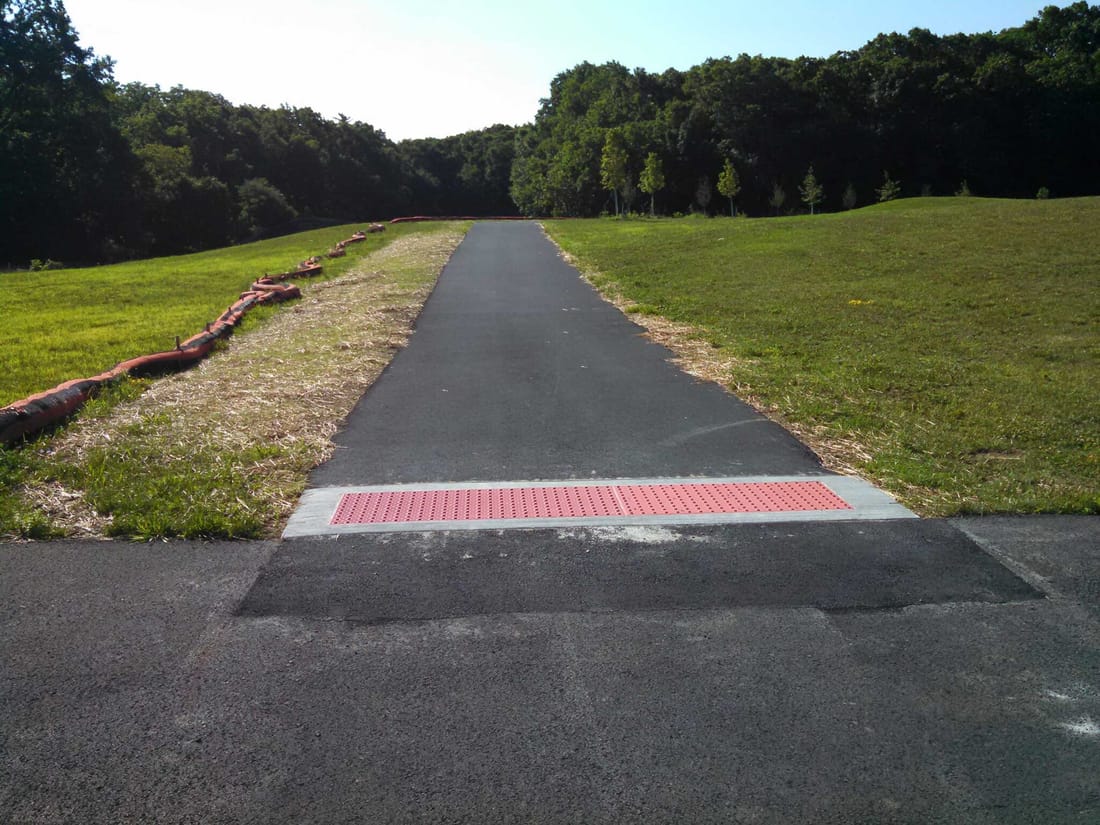
After paving, we address details that affect real world usability: transitions to concrete sidewalks or curb ramps, tie ins to existing asphalt, and height differences at driveway crossings. If the path is part of an ADA route, we verify slopes and cross slopes with digital levels and make corrections while the asphalt is still workable. Proper curing time is short compared to concrete, but we still recommend limiting heavy use for at least 24 hours.
Local Conditions, Common Problems, and How We Prevent Them
Denver’s elevation and climate create specific challenges for asphalt pathway paving that are different from milder regions. Rapid temperature swings and strong sun can age asphalt faster, while freeze thaw cycles push water into any weak spots. Precision Asphalt Denver builds these realities into every pathway, sidewalk, and trail project.
The most common issues we see on older paths in the metro area include longitudinal cracks along the edges, settled low spots that collect ice, and uplift from tree roots. Edge cracking often comes from thin or poorly compacted base at the path sides. To prevent that, we extend the base layer slightly wider than the finished path and compact it thoroughly, which gives the edges proper support.
Standing water is another frequent problem, especially where paths dip slightly near sprinklers or drainage swales. We counter this with careful grading, adding small swales or sub drains where needed, and sometimes incorporating permeable shoulders or gravel relief areas alongside the pavement. During our site walk, we always ask where you see ice or muddy spots in winter and spring, then adjust grades to fix them rather than simply resurfacing over the problem.
Tree roots are addressed early. For mature trees that you want to keep, we look at trunk location and typical root spread, then either adjust the alignment a few feet or install root barriers along the path. This costs less than repeated patching and keeps the walking surface safer over time. When we overlay old asphalt paths, we evaluate whether the base is still sound. If we find pumping, movement, or deep structural cracking, we recommend partial reconstruction rather than a thin overlay that will mirror those defects within a season or two.
What Affects Cost and How to Control Your Budget
Pathway and sidewalk projects come in many sizes, from a short connector between a parking lot and front door to multi acre internal trail systems. Several factors drive cost, and understanding them helps you plan realistically. At Precision Asphalt Denver, we walk you through these items before we propose any work.
Length and width are the most obvious cost drivers, but access can influence price just as much. If our crew can reach the route with standard paving equipment from a nearby street or lot, production is faster and more efficient. Tight backyard easements, steep slopes, or paths that cross irrigation ditches may require smaller equipment or more manual work, which increases labor costs.
The depth of excavation and base thickness also matter. Areas with soft or expansive soils, or trails that will occasionally carry maintenance trucks, need a stronger base and thicker asphalt. While this adds cost upfront, it usually prevents major repairs later. We will present options, for example a standard pedestrian section versus a reinforced section where vehicles will cross, so you can choose where to invest.
Removal of old materials, such as deteriorated concrete or failing asphalt paths, is another piece of the budget. We break out demo and disposal so you can see it clearly. Occasionally we can reuse part of an existing compacted base, which can reduce costs without sacrificing performance.
Finally, features like ADA compliant ramps, striping for shared use trails, bollards, and decorative borders add to the total. Instead of bundling everything into one line, we itemize these so you can prioritize what matters most for your property and your users.
Maintenance, Repairs, and When to Call Precision Asphalt Denver
Once your asphalt pathway, sidewalk, or trail is in place, regular care keeps it safe and attractive. In Denver’s climate, we usually recommend a sealcoat every 3 to 5 years, depending on sun exposure and traffic. Sealcoating is not a cosmetic gimmick. It protects the asphalt binder from UV damage and makes it easier to clear snow and debris.
Snow and ice management also makes a difference. Asphalt generally handles Colorado winters well, but metal shovels and aggressive plow blades can gouge the surface. Using rubber edged blades and avoiding rock salt where possible will extend the life of the pavement. For HOAs and commercial properties, we can coordinate with your snow contractor so they understand the thickness and layout of new paths.
Small cracks and early surface raveling are best handled before they grow. If you notice hairline cracks forming after a few seasons, or a small area where the surface aggregate is loosening, a quick crack fill or skin patch can prevent water from getting into the base. Precision Asphalt Denver offers inspection and maintenance visits where we walk the paths with you, mark issues, and provide a repair plan with priorities.
There are times when resurfacing or partial reconstruction is more cost effective than chasing many small failures. When the surface shows widespread alligator cracking, dips that collect water, or multiple patches that do not stay level, we evaluate the base, check for drainage issues, and then propose either a mill and overlay or a full rebuild in the worst areas only. Our focus is to match the repair level to how the path is used, so your investment lines up with the actual demands on the pavement.