Home › Asphalt Resurfacing & Overlays
Precision Asphalt Denver specializes in asphalt resurfacing in Denver, CO to restore worn driveways without the cost of full replacement. Our team evaluates your existing base, repairs problem areas, then installs a smooth asphalt overlay that improves appearance, drainage, and longevity.
Precision Asphalt Denver provides professional asphalt resurfacing throughout Denver, CO, Colorado and the surrounding area. Our licensed, insured crew delivers safe, clean, on-time work with a free estimate before anything begins. Call (720) 807-8328 or request your free quote.
Asphalt Resurfacing & Overlays for Denver Properties
When your asphalt is cracked, worn, or starting to ravel but the base is still solid, asphalt resurfacing is often the most cost-effective way to restore it. At Precision Asphalt Denver, we focus on resurfacing and overlays for Denver driveways, parking lots, and private roads that need a new wearing surface without a full tear-out.
Resurfacing involves installing a new layer of hot mix asphalt over your existing pavement after it has been properly prepared. For Denver property owners, this can extend pavement life by 8 to 15 years when done correctly, and it usually costs significantly less than a complete replacement. The key is a thorough evaluation of what you have now, not just a quick look from the truck.
Our crew is local to the Denver area, so we understand how freeze-thaw cycles, snow removal, and intense summer sun affect different parts of town. An overlay that holds up in a shaded subdivision in Lakewood might not be the right mix or thickness for a south-facing commercial lot off I-25 that sees heavy delivery trucks. We adjust our recommendations based on how your pavement is actually used and the micro-conditions on site.
How We Evaluate Whether Resurfacing Is Right For You
Not every cracked lot is a good candidate for asphalt resurfacing. Before we quote an overlay, Precision Asphalt Denver performs a site walk and base evaluation. We are looking for structural problems, drainage issues, and signs that the existing asphalt has lost its bond to the base.
We check for excessive alligator cracking, deep rutting where vehicles sit or turn, widespread soft spots, and large areas of standing water after storms or snowmelt. If the base has failed in multiple locations, a simple overlay will only hide problems for a short time. In those cases, we talk honestly about removal and replacement instead of selling you work that will not last.
On suitable candidates, we core or cut small test spots when needed to see how thick the existing pavement is and what kind of base is below. For commercial properties in Denver, we also ask about trash truck routes, delivery patterns, and snow plow routines. All of this helps determine if a standard overlay, a thicker structural overlay, or selective tear-out plus resurfacing is the best value for you.
Step-by-Step: What Happens During Asphalt Resurfacing
Knowing what to expect makes the project smoother for everyone. Here is how Precision Asphalt Denver typically handles an asphalt resurfacing or overlay:
1. Surface cleaning and milling: We start by cleaning the surface with mechanical sweepers and blowers, removing dirt, sand, and loose aggregate. In transitions to garages, sidewalks, drains, or streets, we mill or grind the old asphalt to create a smooth tie-in. In Denver, this is especially important at alley entrances, ADA ramps, and where snow plows catch edges.
2. Repairs and patching: Any potholes, severe alligator cracking, or failed areas are cut out to firm base and patched with new hot mix asphalt. If only the top layer has failed, we may mill down those sections and rebuild them to match surrounding grade.
3. Leveling course if needed: On lots that have ruts or depressions, we place a leveling course of asphalt to even out the surface before the final overlay. This helps prevent ponding after rain or snowmelt and gives a uniform final look.
4. Tack coat application: We apply a tack coat, a thin layer of asphalt emulsion, to the prepared surface. This is what bonds the new overlay to the existing pavement. Skipping or skimping on tack is a common shortcut that causes delamination, so we pay close attention to full and even coverage.
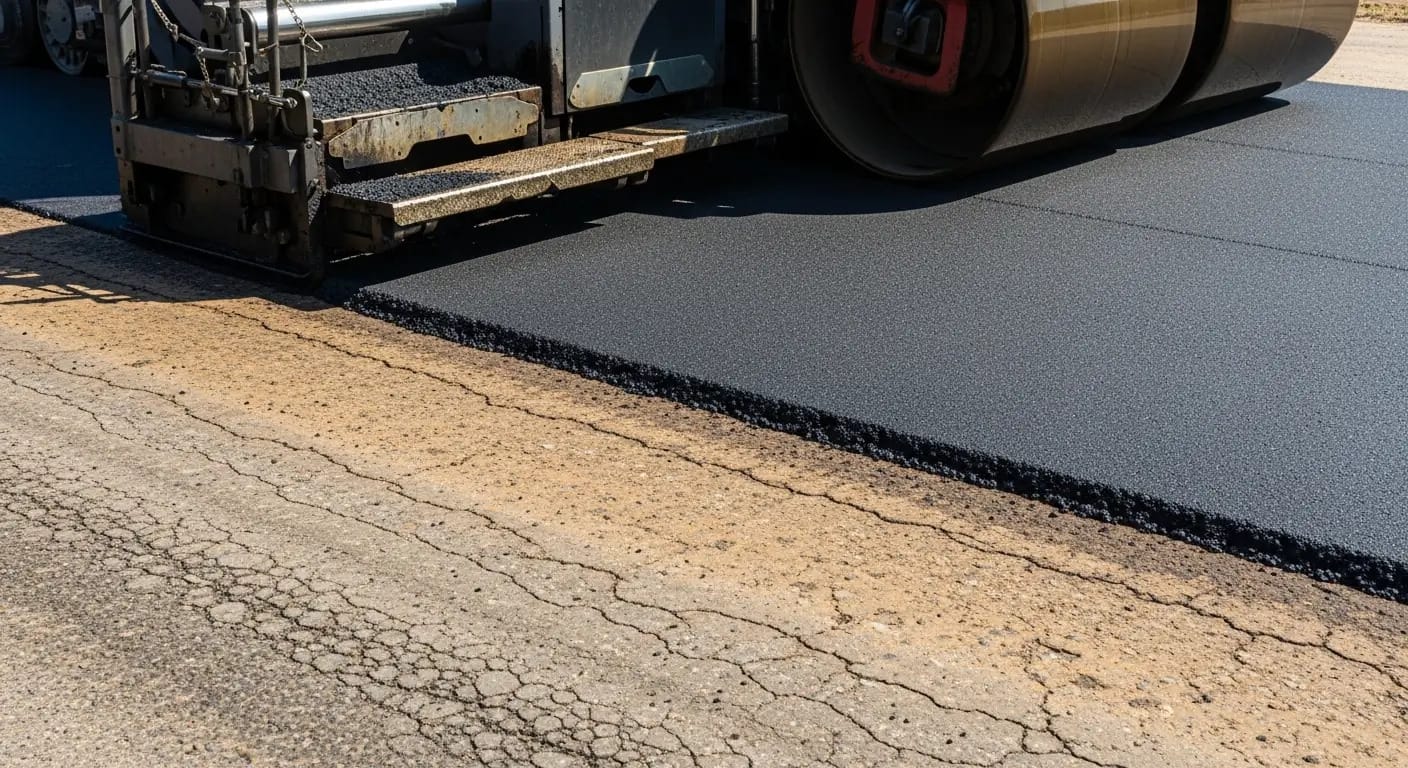
5. Installing the overlay: We place hot mix asphalt using a paver for consistent thickness and smoothness, then compact it with steel drum and pneumatic rollers. Typical overlay thickness runs from 1.5 to 3 inches, depending on usage, existing conditions, and your budget.
6. Final rolling and joint detail: We finish with detail compaction around drains, curbs, and transitions so there are no abrupt bumps. Joints and tie-ins are carefully rolled to minimize future cracking at those seams.
7. Striping and cleanup: For parking lots, we restripe stalls, ADA spaces, and directional markings after the asphalt has cooled. We coordinate timing to get you back in operation as quickly as possible while still respecting curing time.
Material Options and Overlay Design Choices
Not every overlay uses the same mix or thickness. Precision Asphalt Denver works with local asphalt plants in the Denver metro area, so we select mixes that are proven for Front Range conditions.
For residential driveways and light-use parking areas, a standard hot mix overlay at 1.5 to 2 inches is often appropriate. For commercial lots that see delivery trucks, buses, or frequent dumpster service, we usually recommend a thicker overlay and sometimes a different aggregate blend to improve resistance to rutting.
We also consider the age and stiffness of your existing pavement. Older, brittle asphalt may benefit from a slightly richer mix in the overlay to improve flexibility through winter. In shaded areas that hold moisture and ice longer, we may tighten slope and recommend more aggressive drainage improvements before paving.
Overlay design includes markings and layout as well. When we resurface commercial parking lots in Denver, we can adjust stall widths, add loading zones, update ADA-compliant access aisles, and rework traffic flow markings as part of the same project. This is often the best time to solve long-standing circulation complaints from customers or tenants.
Costs, Lifespan, and What Affects Your Price
Asphalt resurfacing generally runs significantly less per square foot than full removal and replacement, but the range can be wide depending on conditions. Precision Asphalt Denver provides itemized proposals so you can see where your money is going.
The major cost drivers are: total square footage, amount of milling for transitions, number and depth of base repairs, overlay thickness, and whether we need off-hours work or traffic control. A simple residential overlay with minimal repairs might be completed in a day. A busy commercial lot, especially downtown or in tight neighborhoods, may require night work and phasing, which can increase labor and traffic control costs.
Denver’s weather also affects pricing and scheduling. The best paving temperatures usually run late spring through early fall. If we need to work during shoulder seasons, extra attention goes to mix temperature, compaction timing, and protection from sudden cold snaps. We do not recommend resurfacing if conditions will not allow for proper compaction because that shortens pavement life and wastes your investment.
With proper design and maintenance, an asphalt resurfacing in Denver often lasts 8 to 15 years. The lower end applies to heavy truck traffic and harsh plowing, while light-use residential surfaces with regular sealcoating and crack sealing tend toward the longer side.
Common Denver Issues and How We Address Them
Local conditions in Denver create specific challenges for overlays that out-of-town contractors sometimes underestimate. Precision Asphalt Denver plans projects around these realities so your new surface holds up longer.
Freeze-thaw cycles and elevation mean water management is critical. Before paving, we check slopes toward drains, gutters, or landscaping. If your current lot has puddles that turn into ice sheets in winter, we correct those low spots with milling and leveling courses as part of the resurfacing plan.
Snow removal practices also matter. Repeated contact from steel plow blades can damage thin or poorly compacted overlays. For commercial properties, we can coordinate with your snow contractor to talk about blade height, where to stack snow, and which areas are most vulnerable. In tight alleys and small lots, we sometimes recommend thicker overlays in the paths plows use most.
Oil spots, deicer chemicals, and heavy UV exposure along the Front Range can accelerate surface oxidation. We address heavy oil areas by milling or cutting out saturated spots and replacing them, not just paving over contamination that will weaken the bond. After resurfacing, we often recommend a sealcoat schedule tailored to your traffic level to protect the new surface from Denver’s sun and winter treatments.
What To Expect When You Hire Precision Asphalt Denver
From first call to final striping, we work to keep disruptions low for your household, tenants, or customers. For residential resurfacing, we provide a clear schedule, explain when you can drive on the surface again (usually 24 hours for light vehicles, longer in cooler weather), and help you plan temporary parking options.
For commercial properties, we can phase the work so part of the lot remains open, or schedule during off-hours when traffic is light. We coordinate with property managers to notify tenants, place signage, and protect fresh pavement from early traffic. In downtown Denver and busy corridors, we also help with basic traffic control planning.
You will receive a written scope describing prep work, thickness, mix type, and any base repairs, not just a one-line “overlay” description. After completion, we walk the site with you, explain maintenance recommendations, and discuss any warranty terms. Our goal is straightforward: for you to understand exactly what was done, why it was done that way for Denver conditions, and how to get the most years out of your resurfaced asphalt.