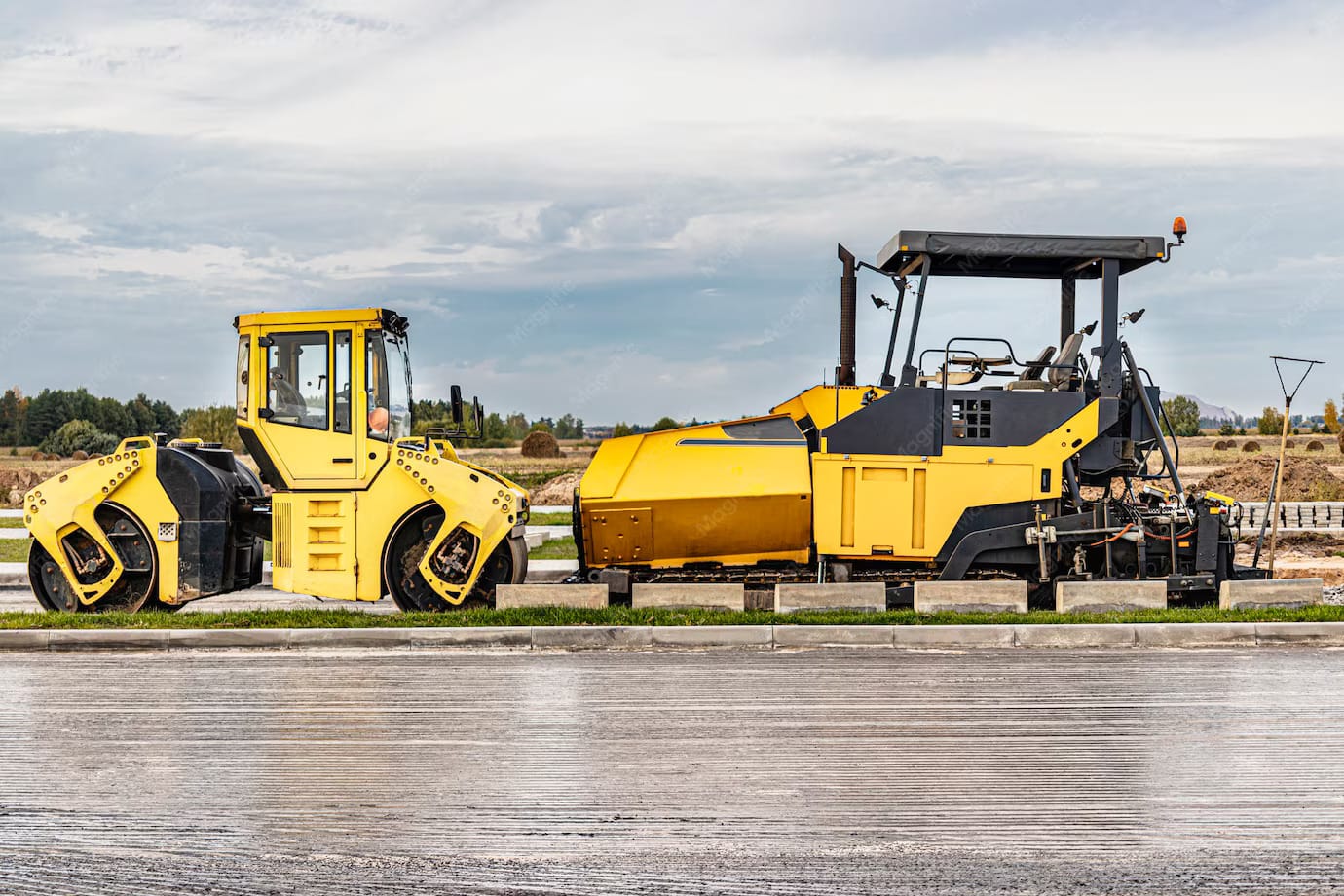
Home › Industrial and Heavy-Duty Asphalt Paving
Precision Asphalt Denver provides industrial asphalt paving in Denver, CO for facilities that demand heavy duty performance. We design thicker sections and stronger bases for truck yards, loading docks, and equipment areas so your pavement can withstand constant loading and turning without rapid failure.
Precision Asphalt Denver provides professional industrial asphalt paving throughout Denver, CO, Colorado and the surrounding area. Our licensed, insured crew delivers safe, clean, on-time work with a free estimate before anything begins. Call (720) 807-8328 or request your free quote.
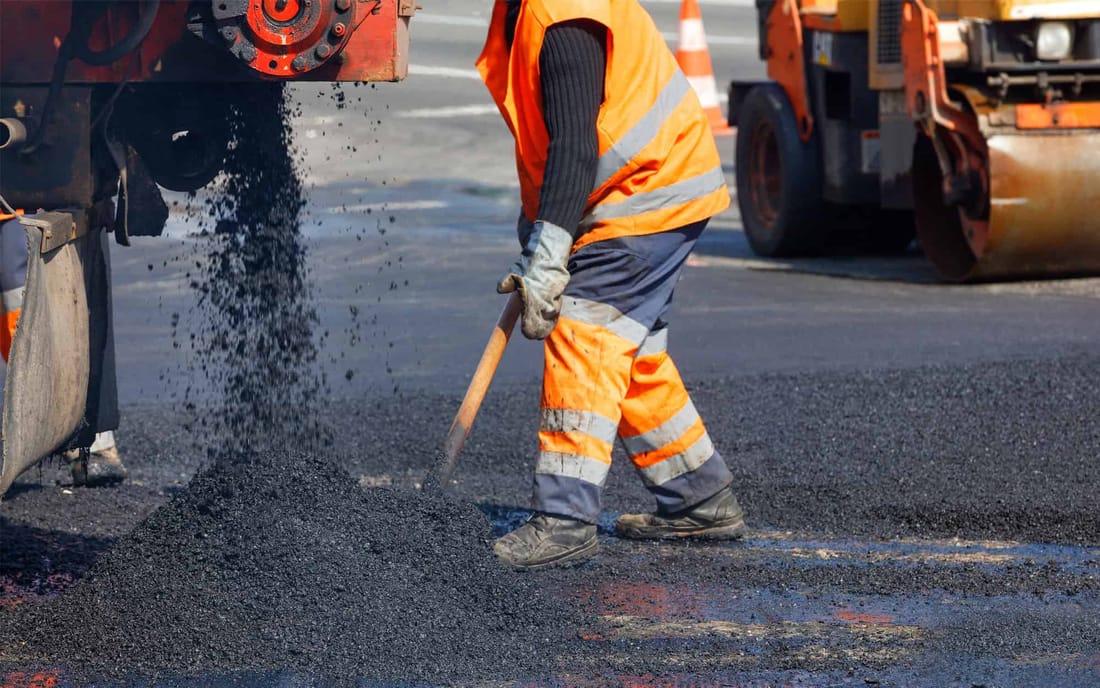
Industrial Asphalt Paving for Denver’s Toughest Sites
Precision Asphalt Denver designs and installs industrial asphalt paving that holds up to forklifts, semi-trucks, heavy equipment, and continuous traffic. Our focus is not just on getting a black surface down. We design pavement structures that match the loads, subgrade soil, and freeze-thaw cycles we see every year in the Denver metro.
Industrial and heavy-duty asphalt paving is different from a typical parking lot. We look at how many trucks you have per day, whether they turn sharply in the same locations, the weight of your equipment, and what type of operations you run. A warehouse with daily pallet jack traffic has different pavement needs than a concrete plant with loaders and dump trucks.
Most of our industrial work in Denver involves distribution centers, manufacturing facilities, trucking yards, utility and energy sites, and municipal service yards. Each of these requires thicker asphalt sections, stronger base layers, and more attention to drainage and joint locations than standard commercial lots.
By talking through how your site is actually used, Precision Asphalt Denver can recommend a pavement design that resists rutting, shoving, and early cracking, even under Colorado’s large temperature swings.
How We Design Heavy-Duty Asphalt Pavement Structures
The engineering behind industrial asphalt paving starts with pavement structure design. Precision Asphalt Denver typically evaluates four layers: subgrade soil, subbase (if needed), aggregate base course, and hot mix asphalt.
We start with the subgrade. In many parts of Denver and the Front Range, native soils have pockets of expansive clays or loose fill from past construction. If we find soft or pumping areas during proof rolling, we either undercut and replace them with better material or stabilize them with imported road base. Skipping this step is a leading cause of early pavement failure in industrial yards.
Next we select the base and asphalt thickness. For light industrial parking with occasional trucks, we might use 4 to 5 inches of asphalt over 6 inches of compacted Class 6 aggregate base. For truck docks, loading lanes, and equipment paths, we often recommend 6 to 8 inches of asphalt over 8 to 12 inches of base. Areas with constant heavy loads or container storage can require even more structure or a combination of asphalt and concrete in the highest stress zones.
We also look at asphalt mix types. For heavy-duty use, we typically specify mixes with a higher quality aggregate, more angular rock, and appropriate binder grades for Colorado’s climate. Where rutting is a concern, for example in slow moving truck queues, we may recommend a stiffer mix that resists deformation in summer heat.
Our Step-by-Step Industrial Paving Process
Precision Asphalt Denver follows a defined process to keep industrial and heavy-duty projects predictable and durable.
1. Site evaluation and planning: We walk the site, review your operations, locate heavy traffic patterns, and verify access for trucks and pavers. For existing facilities, we note drainage problems, soft spots, and areas with recurring failures so we can correct the underlying causes.
2. Milling, excavation, and subgrade prep: On reconstruction projects we mill or remove existing asphalt to the required depth. We then cut out soft areas, recompact the subgrade, and proof roll to locate hidden weak zones. On new construction we trim subgrade to elevation, establish slopes for drainage, and compact to specification.
3. Base installation and compaction: We install aggregate base in lifts, generally 3 to 4 inches at a time, and compact each lift with vibratory rollers. We check thickness and verify that base grades provide proper flow to inlets or swales. A well compacted base is what keeps heavy-duty pavement from pumping and developing potholes.
4. Asphalt placement in multiple lifts: For industrial thicknesses, asphalt is rarely installed in a single lift. A typical heavy-duty section might be placed in two or three lifts, with each layer compacted to target density before the next is laid. This improves bond between lifts and reduces the risk of slippage planes that can lead to shoving at tight truck turns.
5. Joint and detail work: Industrial yards have transitions at dock doors, rail spurs, trench drains, and utility covers. We give these details extra attention so they do not become weak points. We saw cut clean edges, use tack coat between lifts and at joints, and ensure flush transitions to reduce impact loads.
6. Final rolling, striping, and turnover: After final compaction, we allow proper cooling before striping traffic lanes, safety zones, and loading areas. We walk the site with you to confirm that dock approaches, turning radii, and staging areas function as intended.
Material and Design Options for Heavy-Duty Use
Industrial asphalt paving can be customized based on your operations, maintenance budget, and future expansion plans. Precision Asphalt Denver offers several design options that are specific to heavy-duty environments.
Reinforced asphalt sections: In areas with constant wheel paths, such as fueling lanes and scale approaches, we may recommend thicker asphalt lifts or a reinforced base with larger aggregate. This focuses strength where your loads are highest without overbuilding your entire yard.
High performance mixes: For some projects we specify polymer modified binders for additional resistance to rutting and thermal cracking. These mixes cost more per ton but can be cost effective in very high traffic zones or where temperatures fluctuate widely, a common situation in Denver’s shoulder seasons.
Hybrid pavement strategies: Not every square foot of an industrial site sees the same stress. We often design hybrid solutions that use heavy-duty asphalt in drive lanes and maneuvering areas, standard commercial asphalt in car parking, and sometimes concrete panels at dumpster pads or loading docks. This balances initial cost with long-term performance.
Surface treatments: To extend life and delay major reconstruction, we plan for future maintenance at the design stage. Options include seal coats, crack sealing programs, and occasional skin overlays in non critical areas. In heavy-duty zones we are careful about which surface treatments are compatible with your traffic and temperature conditions.
What Drives the Cost of Industrial Asphalt Paving in Denver
Industrial paving costs are driven by structure, access, and risk. Precision Asphalt Denver is transparent about what affects your budget so you can make informed decisions.
Thickness and materials: The biggest cost driver is the total thickness of asphalt and base needed to support your loads. Thicker sections mean more material and more time. High performance mixes and polymer modified binders also add cost but may reduce lifecycle expenses, especially in high traffic truck lanes.
Subgrade and drainage corrections: If your site has poor soils, underground springs, or chronic drainage problems, we may need underdrains, additional base, or more extensive undercutting. Fixing these issues up front is usually cheaper than repeated spot repairs over the next decade, but it does add to initial cost.
Phasing and access: Active industrial sites often need to stay in operation during paving. Working in tight phases, off hours, or weekends is very doable, but it increases mobilizations and coordination time. We work with you to pick a phasing plan that balances operational impact with cost.
Location and logistics: Sites in central Denver with limited staging space, steep grades, or constrained truck routes can cost more to pave than open sites on the outskirts. We account for haul distances from asphalt plants, traffic congestion, and required traffic control when we estimate your project.
Common Industrial Pavement Problems We Solve in Denver
Many of our industrial asphalt paving projects begin as calls about chronic failures in specific areas. Recognizing these patterns helps us design improvements that actually last.
Rutting and shoving at truck lanes and docks: Repeated truck loading, especially during turning and braking, can cause the asphalt to ripple or form ruts. We address this by upgrading the mix design, increasing structure in the wheel paths, and in some cases adjusting grades to reduce standing water that softens the surface.
Alligator cracking and potholes in wheel paths: These usually point to base or subgrade problems. Instead of simply patching the surface, we cut out failed areas, correct any base or drainage issues, and replace the section with a properly compacted, heavy-duty section. This approach reduces the cycle of patch, fail, and patch again.
Edge failures along pavement boundaries: Industrial yards often see failures along the edges where trucks run off the pavement. We add structural edge support, such as widened base, thicker edge sections, or concrete edge restraints in critical locations.
Drainage related damage: Freeze-thaw cycles in Denver quickly exploit standing water. We improve cross slopes, add inlets or swales where needed, and make sure new pavement ties into existing structures without creating birdbaths that trap water.
What to Expect When You Work With Precision Asphalt Denver
From the first meeting, Precision Asphalt Denver treats your industrial and heavy-duty asphalt paving project as an engineering task, not just a paving job.
We start with a review of your operations, traffic patterns, and any known issues. For larger or more demanding facilities, we can coordinate with your engineers or facilities team to review load data and future expansion plans. We then provide a clear proposal that outlines pavement sections, materials, phasing, and expected service life.
During construction, our crews maintain safe access routes for your staff and trucks wherever possible. We communicate phase changes and closures in advance so you can plan around them. Quality control is handled in the field with regular checks on thickness, temperatures, and compaction, and we adjust in real time for Denver’s rapidly changing weather conditions.
After completion, we can help you build a maintenance plan that focuses limited dollars on the highest risk areas first. Our goal is to deliver industrial asphalt paving that fits your operation and budget, and that you do not have to think about every season when the weather changes.
If you manage an industrial facility, yard, or distribution center in the Denver area and need new pavement, reconstruction, or upgrades to handle heavier loads, Precision Asphalt Denver is prepared to design and build a solution tailored to your site.